
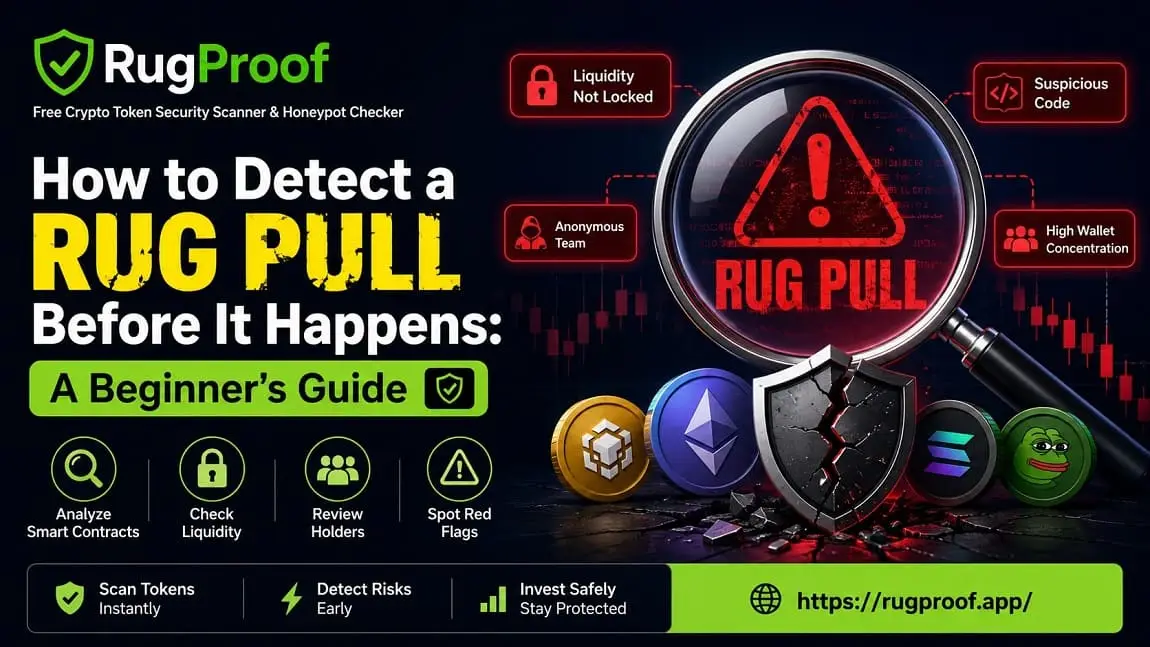
Every year, thousands of crypto investors lose money to rug pulls — tokens that look promising one moment and become worthless the next. The good news is that most rug pulls leave clues behind, if you know where to look. Learning to detect a rug pull before it happens is one of the most valuable skills you can develop as a crypto investor, whether you're buying your first meme coin or actively trading new token launches.
This guide walks you through what rug pulls actually are, how they work, and the practical steps you can take to spot the warning signs before you put any money at risk.
📑 Table of Contents
- What Is a Rug Pull?
- Why Detecting a Rug Pull Matters
- How Rug Pulls Actually Work
- Key Warning Signs to Watch For
- Benefits of Early Detection
- Risks of Ignoring the Signs
- Common Mistakes Investors Make
- Real-World Example
- Best Practices for Safer Investing
- Step-by-Step Guide to Checking a Token
- Frequently Asked Questions
- Final Thoughts
What Is a Rug Pull?
A rug pull happens when the creators of a crypto project abandon it after taking investors' money, usually by draining liquidity, disabling the ability to sell, or minting new tokens to crash the price. The term comes from the phrase "pulling the rug out" — one moment the project looks solid, and the next, it's gone.
Rug pulls can happen on any blockchain, but they're especially common with newly launched tokens that have little history, low liquidity, and anonymous teams. If you want a deeper breakdown of how these scams unfold, RugProof's Rug Pull Detection guide covers the topic in more detail.
Why Detecting a Rug Pull Matters
Detecting a rug pull early isn't just about avoiding a bad trade — it's about protecting your entire portfolio. A single rug pull can wipe out gains from dozens of successful trades. Beyond the financial loss, falling for a rug pull can also expose your wallet to further risk if the scam involves malicious contract permissions or token approval exploits.
Investors who take a few minutes to check a token before buying are far less likely to fall victim to these schemes, and that small habit can save significant money over time.
How Rug Pulls Actually Work
Most rug pulls follow a similar pattern, even though the specific tactics vary:
- Liquidity removal: Developers pull the funds backing the token's trading pair, instantly collapsing its value.
- Mint function abuse: If a contract retains minting rights, the team can create unlimited new tokens and sell them, flooding the market.
- Honeypot contracts: Some tokens are coded so that only the developer's wallet can sell, trapping everyone else's funds.
- Ownership retention: If ownership hasn't been renounced, the original team can change contract rules at any time.
Understanding these mechanics is the foundation of Rug Pull Detection, because each one leaves a technical fingerprint you can check for before investing.
Key Warning Signs to Watch For
- Liquidity that isn't locked or burned
- A contract owner who hasn't renounced control
- Extremely concentrated holder distribution, where a few wallets hold most of the supply
- Sudden spikes in trading volume that don't match social activity (often wash trading)
- Anonymous teams with no verifiable track record
- Aggressive marketing paired with vague or missing technical documentation
- Tokens that appeared very recently with little to no audit history
Benefits of Early Detection
- Protects your capital before it's ever at risk
- Builds better long-term investing habits
- Reduces emotional decision-making during hype cycles
- Helps you recognize patterns across multiple projects, not just one
Risks of Ignoring the Signs
Skipping due diligence doesn't just risk losing your investment. It can also mean:
- Approving malicious smart contracts that drain other tokens from your wallet
- Falling for fake presales or fake airdrops tied to the same scam
- Becoming a target for follow-up phishing scams once your wallet address is known to be active
Common Mistakes Investors Make
- Chasing hype instead of research: FOMO is one of the biggest drivers of rug pull losses.
- Assuming a high market cap means safety: Even tokens with fast-growing volume can be manipulated through wash trading.
- Ignoring contract permissions: Many investors never check whether a mint function or ownership control still exists.
- Trusting influencer promotions blindly: Paid promotions don't equal technical safety.
- Not verifying liquidity locks: A locked liquidity pool is one of the simplest checks, yet frequently skipped.
Real-World Example
Meme coins are a common category for this kind of scam because they launch quickly and rely heavily on social hype. A token might see rapid price growth driven by social media buzz, only for the liquidity to be pulled once enough buyers pile in. Reviewing historical token analyses, such as the ones available on RugProof's token analysis pages, can help you understand what red flags looked like in hindsight for past projects.
Best Practices for Safer Investing
- Always check liquidity lock status before buying
- Verify whether contract ownership has been renounced
- Review holder distribution for whale concentration
- Cross-check trading volume against social engagement
- Use a Honeypot Checker before your first buy
- Start with small position sizes on new or unproven tokens
- Never approve unlimited token spending permissions without understanding what you're signing
Step-by-Step Guide to Checking a Token
- Find the contract address. Never rely on ticker symbols alone; scammers often copy names of popular tokens.
- Run a security scan. Use a tool like RugProof's Token Risk Scanner to check ownership status, liquidity, and honeypot risk in one place.
- Check liquidity lock status. Confirm whether liquidity is locked or burned, and for how long.
- Review holder distribution. Look for whether a small number of wallets control most of the supply.
- Test sell simulation. A honeypot check simulates a sell transaction to confirm you can actually exit a position.
- Research the team. Look for any verifiable background, even if the team uses pseudonyms.
- Monitor smart money activity. Tools like a Smart Money Tracker can show whether experienced wallets are buying or avoiding a token.
- Watch new listings carefully. A Token Radar can help you spot trending tokens early, but always pair discovery with a full security check.
Frequently Asked Questions
1. Can a rug pull happen on any blockchain? Yes. Rug pulls have occurred on Ethereum, BNB Chain, Solana, and virtually every major chain with token creation tools.
2. Is a locked liquidity pool a guarantee of safety? No. It reduces one major risk, but other issues like mint functions or honeypot code can still exist even with locked liquidity.
3. What is a honeypot token? A honeypot is a token contract designed so that only specific wallets, usually the developer's, can sell, while everyone else's tokens remain stuck.
4. How can I tell if a project's volume is fake? Compare trading volume with actual social engagement and holder growth. Wash trading often shows high volume with little real community activity.
5. Does renounced ownership mean a token is completely safe? Not necessarily. Renounced ownership removes some risks, but other contract functions could still allow manipulation, so it should be one check among several.
6. What should I do if I already interacted with a suspicious contract? Review and revoke any token approvals you've granted, and avoid interacting with the contract further.
7. Are rug pulls illegal? Laws vary by jurisdiction, and enforcement in crypto is still developing. Regardless of legality, recovering lost funds is often difficult, which is why prevention matters most.
8. How long does a proper token check take? With the right tools, a thorough check can take just a few minutes, especially when using a combined scanner for liquidity, ownership, and honeypot risk.
Final Thoughts
Learning to detect a rug pull before it happens comes down to consistent habits: checking liquidity, reviewing ownership, watching holder distribution, and testing whether a token can actually be sold. No single check is foolproof, but combining several gives you a much clearer picture of a project's real risk level.
Crypto markets move fast, and no tool can guarantee outcomes or eliminate risk entirely. Still, taking a few minutes to run a security check with a resource like RugProof before investing can help you make more informed decisions and avoid some of the most common scams in the space. Prioritizing research over hype is, ultimately, the best protection any investor has.