
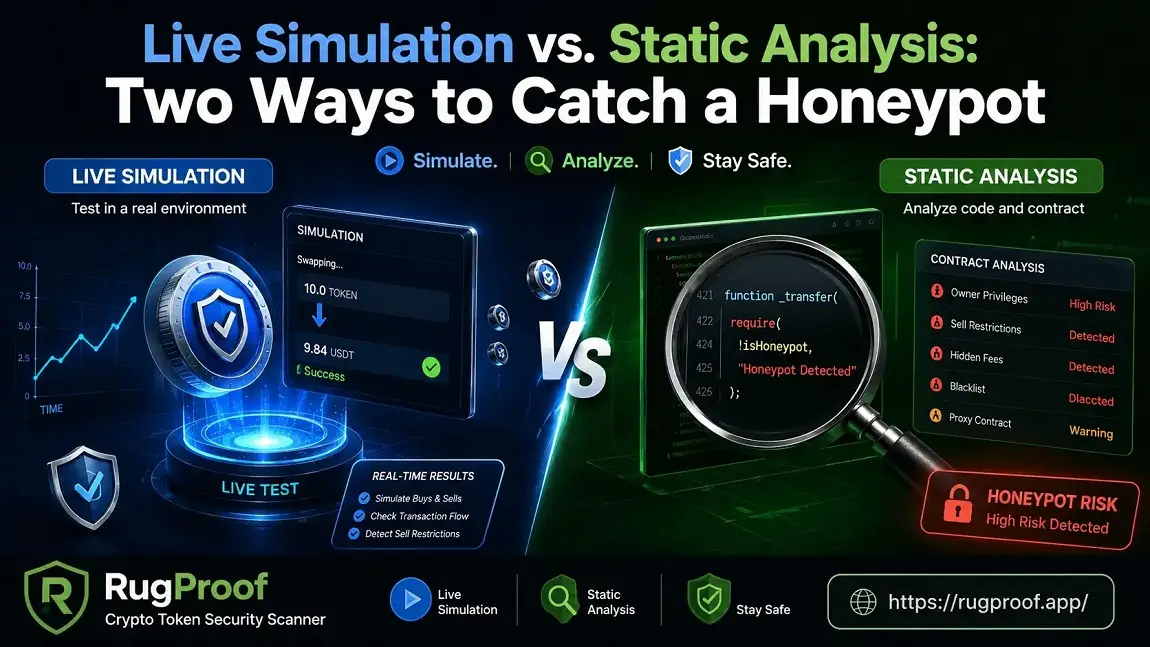
Not all honeypot checks work the same way. On this site, we actually use two different methods depending on which blockchain a token is on, and it's worth understanding the difference.
Static analysis
Static analysis reads a contract's bytecode and permissions without executing a real transaction. It's fast, works across dozens of chains, and reliably catches common patterns like blacklists, extreme taxes, and dangerous owner functions.
Live simulation
Live simulation goes a step further: it actually executes a real buy, then immediately tries to sell, against the token's real liquidity pool. This can catch honeypot logic that only triggers during an actual transaction, which static analysis can sometimes miss.
Which one should you trust more?
Where both are available, live simulation is generally the stronger signal, since it tests real behavior rather than inferring it. That's why our Honeypot Detector uses live simulation on Ethereum, BNB Chain and Base, and falls back to static analysis everywhere else we support. Using both methods together, alongside a full token safety scan, gives you the most complete picture before you buy.